Our Solar System consists of eight planets, including Earth, each with a unique set of moons. Some planets boast numerous moons, while others have just a few—or none at all. But which planet holds the record for the most moons? Are moons common throughout our Solar System?
And, interestingly, could a moon have its own moon?
As with many questions related to planets, the answer depends on whether we’re discussing our Solar System specifically or considering planets throughout the universe. It also hinges on how we define what a moon actually is.
Defining a Moon: Traditional vs. Small Body Moons
NASA classifies moons into two categories:
-
Traditional Moons: These are the moons most people are familiar with—large objects that orbit their parent planets at relatively close distances, similar to our own Moon.
-
Small Body Moons: These include smaller celestial bodies like asteroids and Kuiper Belt Objects. While they can orbit planets instead of the Sun, they are much smaller in size and tend to orbit at much greater distances.
Moons Across the Solar System
When it comes to traditional moons, not every planet in our Solar System is equally blessed. Venus and Mercury, for example, have no moons at all. Earth has one, while Mars has two small moons: Phobos and Deimos.
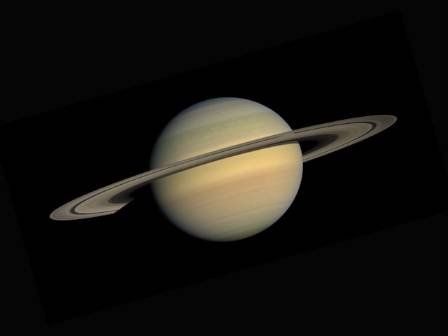
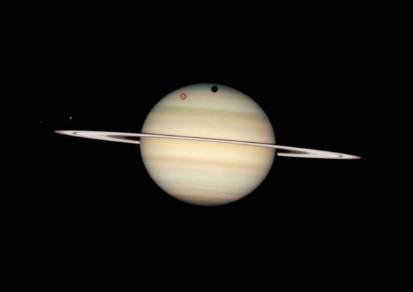
However, the real moon collectors are the gas giants. Jupiter has an impressive 95 moons, but Saturn outshines it with a whopping 146 confirmed moons, making Saturn the true king of moons in our Solar System.
As we move further out, Uranus hosts 27 moons, Neptune has 14, and even the dwarf planet Pluto can claim 5 moons. Altogether, the Solar System contains 290 traditional moons.
But if we include small body moons, NASA reports a total of 752 moons in our Solar System.
Exoplanets and Their Potential Moons
When we shift our gaze beyond our Solar System, things get a bit murkier. Exoplanets—planets orbiting stars outside our Solar System—are so distant that detecting them, let alone any moons they might have, is incredibly challenging. So far, astronomers haven't definitively identified any exomoons.
Still, observations of certain "hot Jupiter" exoplanets—such as Kepler-1625b, Kepler-1708b, and Kepler-1513b—hint that they could have moons. Although we don’t have direct evidence yet, there's no scientific reason to believe that exoplanets wouldn't have moons. In fact, given that some exoplanets are far larger than Jupiter or Saturn, it's reasonable to assume they could have an even greater number of natural satellites.