The Global Presence and Framework of Cricket
The International Cricket Council (ICC) serves as the principal authority overseeing the sport, comprising 108 member nations, which highlights the widespread appeal of cricket globally. Out of these, 12 full members have the privilege of participating in Test matches, while 96 associate members compete in One Day Internationals (ODIs) and Twenty20 Internationals (T20Is).
In 2019, the ICC elevated the status of eight associate members to that of ODI status through the World Cricket League. This guide delves into the countries that participate in cricket, their membership status with the ICC, and the challenges and prospects for the sport’s development worldwide.
A Snapshot of Cricket’s Origins and the Role of the ICC
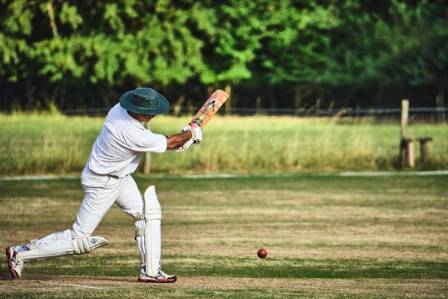
Cricket's roots date back to the late 1500s in England. By 1877, the first international Test matches were held between nations. The Imperial Cricket Conference, which eventually evolved into the ICC, was founded in 1909 to regulate the sport globally. Today, the ICC administers over 100 member countries, though only 12 are granted full Test status.
As the sport's governing body, the ICC is responsible for determining the Laws of Cricket and overseeing national and international competitions.
ICC’s Full Member Nations
The ICC’s 12 full members enjoy the rights to play Test matches, vote in ICC meetings, and engage in ODIs and T20Is. These nations have a long history with cricket, with several having played Test matches for over a century.
In April 2021, the ICC granted full Women's Test status to all full member countries, marking a significant step forward in gender equality in the sport.
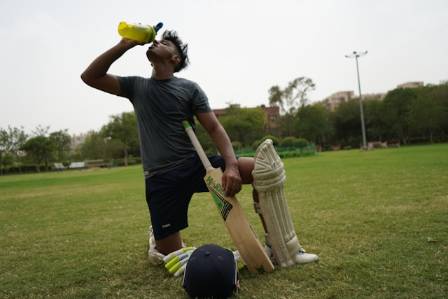
The First International Cricket Match
The inaugural international cricket match occurred in 1844, between the USA and Canada at St George’s Cricket Club in New York, laying the foundation for international cricket. However, the first official Test match took place in 1877 between Australia and England.
ICC Associate Member Nations
The ICC boasts 96 associate members, which do not have the authority to play Test matches but remain active in ODIs and T20Is. Many of these nations participate in ICC tournaments, striving to gain more visibility and recognition.
Over time, a few former associate members, like Afghanistan and Ireland, have achieved full membership due to the sport’s growth within their borders. Since 2019, associate members have had the opportunity to compete in the ICC Cricket World Cup League 2 and the ICC Cricket World Cup Challenge League.
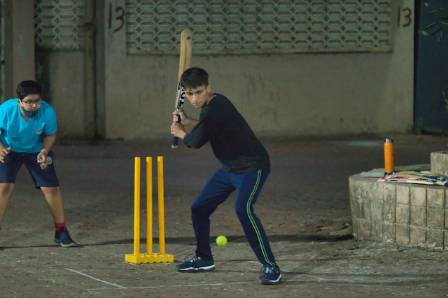
Cricket’s Regional Governance Bodies
Regional organizations play an essential role in fostering and promoting cricket within their areas. They focus on improving the sport's quality, availability, and opportunities for players at the grassroots and international levels.
Asian Cricket Council (ACC): Established in 1983, the ACC aims to advance cricket in Asia, now representing 30 member nations and organizing various tournaments, coaching clinics, and development initiatives.
Africa Cricket Association (ACA): Founded in 1997, the ACA works to promote cricket across Africa, with 23 member countries and regional competitions such as the Africa T20 Cup and the Africa Women’s Twenty20 Championship.
ICC Americas: Formed in 2001, ICC Americas supervises cricket development in the Americas and the Caribbean, offering funding and training programs to its 17 members.
ICC East Asia-Pacific (EAP): Founded in 1996, ICC EAP focuses on expanding the sport in East Asia and the Pacific, supporting two Test nations and 10 associate members.
ICC Europe: Created in 2008, ICC Europe manages cricket across 34 European nations, striving to grow the sport within the continent.
Former ICC Member Nations
Six countries were once part of the ICC but no longer hold membership. These primarily include former associate members. The list comprises:
Morocco (1999-2019)
Tonga (2000-2014)
Brunei (2002-2015)
Cuba (2002-2013)
Zambia (2003-2021)
Russia (2012-2022)
Additionally, the East Africa team, consisting of Kenya, Uganda, Tanzania, and Zambia, dissolved in 2003, with each nation becoming an individual member.
The Evolution of Cricket
Cricket's origins can be traced back to 1611 when it was initially a children’s pastime. By the 18th century, it had become a prominent sport for adults in London. Women also began participating in cricket by 1745.
The introduction of One-Day Internationals (ODIs) in 1971 brought a major transformation to the sport with shorter, more dynamic matches, leading to the establishment of the Cricket World Cup in 1975.
In 2005, T20 Internationals (T20Is) were introduced, further altering the sport’s landscape with even shorter formats. Today, cricket ranks as the second most popular sport in the world.