The term "planet" originates from the Greek word planētes, which translates to "wanderers." In a broad scientific sense, a planet is a substantial natural satellite that revolves around a star, such as our Sun, but does not generate its own light through internal nuclear fusion. Beyond this basic description, the scientific community often applies specific criteria regarding an object's dimensions, mass, and physical form to distinguish it from smaller celestial debris.
According to the International Astronomical Union (IAU), the official body responsible for naming and classifying cosmic objects, there are eight recognized planets in our solar system. Starting from the Sun and moving outward, these are Mercury, Venus, Earth, Mars, Jupiter, Saturn, Uranus, and Neptune. While Pluto was once included in this group, its status was officially changed in 2006. For most of human history, the only known planets were those within our own solar system, but at the end of the 20th century, astronomers confirmed that many other stars also host orbiting planetary bodies.
Evolutionary Perspectives on Solar System Planets
The definition of a planet has shifted over time based on historical consensus and technological progress. Ancient astronomers identified seven "wanderers" that moved against the backdrop of the stars: the Sun, the Moon, Mercury, Venus, Mars, Jupiter, and Saturn. Following the acceptance of the heliocentric model, the Sun and Moon were removed from this category, and the term was reserved for large bodies orbiting the Sun. The discovery of Uranus in 1781 and Neptune in 1846 fit neatly into this established framework.
Pluto’s discovery in 1930 was initially hailed as the finding of a ninth planet. However, as decades passed, its tiny size, icy composition, and unusual orbit began to set it apart from its neighbors. By the 1990s, researchers discovered numerous other icy objects beyond Neptune in a region known as the Kuiper belt. It became clear that Pluto was not a lone planet, but rather one of the largest members of a vast field of ancient debris left over from the formation of the solar system.
The 2006 IAU Reclassification and Dwarf Planets
In August 2006, the IAU established a formal definition for a solar system planet, which led to Pluto's reclassification. To be considered a planet under these rules, a celestial body must satisfy three specific requirements: it must orbit the Sun, it must have sufficient gravity to pull itself into a nearly spherical shape, and it must have "cleared the neighborhood" around its orbital path. Pluto failed to meet the third criterion because it shares its orbital space with the frozen objects of the Kuiper belt.
This decision led to the creation of a new category known as "dwarf planets." To qualify as a dwarf planet, an object must orbit the Sun and be spherical, but it does not need to have cleared its orbital path, nor can it be a moon of another body. Currently, this group includes Pluto, the large asteroid Ceres, and the distant object Eris. In 2008, the IAU further refined this by introducing the term "plutoids" to describe dwarf planets located beyond the orbit of Neptune.
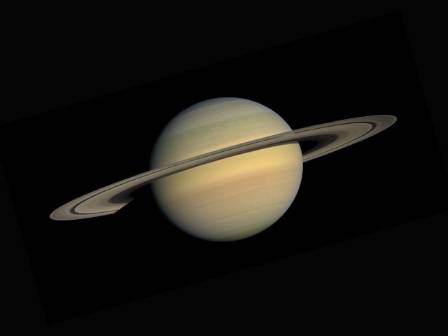
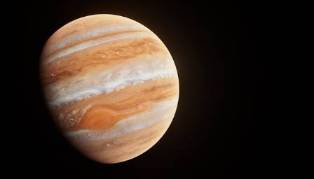
The eight primary planets are further divided into two groups based on their composition. The four closest to the Sun—Mercury, Venus, Earth, and Mars—are known as terrestrial planets because they are composed primarily of rock. The outer four—Jupiter, Saturn, Uranus, and Neptune—are referred to as giant or Jovian planets, consisting largely of gas and ice. Separating these two groups is the asteroid belt, populated by numerous small, rocky bodies.
The Discovery of Planets Beyond Our Solar System
The formation of our solar system began with the collapse of an interstellar cloud of dust and gas, which flattened into a spinning disk. The center became the Sun, while the remaining material coalesced into planets. Astronomers long suspected that similar processes occurred around other stars, but detecting such dim objects against the blinding light of a parent star was historically difficult.
In the early 1990s, researchers successfully used indirect methods to identify the first extrasolar planets, or "exoplanets," by observing the gravitational wobbles they caused in their parent stars. The first planet discovered orbiting a Sun-like star was 51 Pegasi b in 1995. Since then, technology has advanced to the point where more than 5,000 exoplanets have been confirmed, and astronomers have even captured direct infrared images of some. These distant worlds vary wildly in scale, ranging from the size of our Moon to several times the mass of Jupiter. As the catalog of these worlds grows, scientists continue to refine definitions to distinguish between massive planets and low-mass stars known as brown dwarfs.