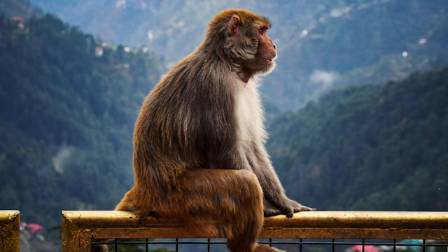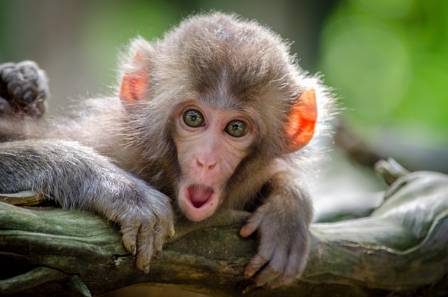
Monkeys are diverse primates primarily inhabiting the world’s tropical rainforests. While many are arboreal, spending their lives in the canopy, others like baboons and macaques are adapted to life on the ground. These animals are categorized into two major groups: New World monkeys, found throughout the Americas, and Old World monkeys, native to Africa and Asia. Beyond their playful reputations, monkeys possess sophisticated social structures, advanced tool-using capabilities, and unique biological adaptations.
Distinguishing Monkeys from Other Primates
The term "monkey" is frequently used as a general descriptor for all primates, yet monkeys occupy distinct evolutionary paths separate from apes (such as humans, gorillas, and chimps) and prosimians (like lemurs). The most visible difference is the tail; nearly all monkeys have one, whereas apes do not. Furthermore, apes generally possess larger bodies and more complex brains, leading to higher levels of cognitive ability compared to their monkey cousins.
Social Grooming and Community Bonds
For monkeys, grooming is far more than a method of cleaning. It is a vital social ritual used to express affection and fortify community ties. Picking debris and insects from a companion's fur helps reduce stress and foster trust within the troop. Interestingly, this behavior also has physical benefits; in vervet monkeys, the act of grooming fluffs the fur so effectively that it can increase the pelt's insulation value by 50%.
The Specialized Function of Prehensile Tails
A common misconception is that all monkeys can swing by their tails. In reality, only certain New World monkeys, such as spider monkeys, howler monkeys, and capuchins, possess prehensile tails capable of grasping objects. Spider monkeys have particularly advanced tails that are longer than their bodies and feature hairless friction pads for a superior grip. Old World monkeys in Africa and Asia have tails, but they lack the muscular ability to use them as a fifth limb.
Global Diversity and Extreme Sizes
Monkeys come in a staggering array of sizes. The Pygmy Marmoset, found in the Amazon Basin, is the world's smallest monkey, weighing only about 4 ounces and measuring 5 inches in length. At the opposite end of the spectrum is the Mandrill of Central West Africa. These are the largest monkeys on earth, with adult males weighing up to 119 pounds. Mandrills are also famous for their vibrant facial and posterior coloration, which serves as a signal of social dominance.
Intelligence and the Use of Tools
Capuchin monkeys are celebrated for their problem-solving skills and were among the first non-ape primates observed using tools in the wild. Archaeological evidence suggests they have used stones to crack nuts for over 3,000 years, even refining their "technology" over time by choosing specific stone sizes for different types of food. They also demonstrate medicinal knowledge, such as rubbing crushed millipedes on their fur to act as a natural insect repellent.
Unique Adaptations and Survival Strategies
Many species have developed fascinating traits to survive in their specific environments. Howler monkeys, for instance, are the loudest land mammals; their roars can be heard three miles away thanks to an enlarged throat bone. In Japan, macaques (snow monkeys) have learned to bathe in volcanic hot springs to stay warm and reduce stress during harsh winters. Even facial color can be functional: the bald uakari’s bright red face is a sign of health, as individuals suffering from malaria often appear pale.
Dietary Habits and Environmental Threats
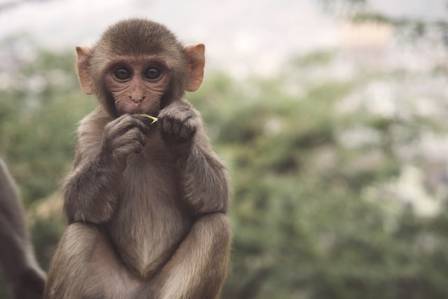
Contrary to popular belief, monkeys rarely eat bananas in the wild, as these are cultivated crops. Most monkeys are omnivorous, consuming a wide-ranging diet of fruits, nuts, flowers, insects, and occasionally small vertebrates.
Unfortunately, many monkey species are currently facing extinction. The primary drivers of their decline include the destruction of tropical forests, hunting for bushmeat, and the illegal pet trade. Critically endangered species like the Cat Ba langur and the Roloway monkey have seen their numbers drop to dangerously low levels, highlighting the urgent need for international conservation efforts and habitat protection.