Dusk has always been a favorite topic in the world of fine art, and few creators have managed to freeze its passing splendor as skillfully as Claude Monet. In this exploration, we examine Monet’s legendary evening masterpieces. By observing his portfolio, we can uncover specialized methods to motivate our own creative attempts at painting the setting sun.
A Brief Overview of the Impressionist Movement
Impressionism appeared during the late 1800s, defined by a dedication to freezing the fleeting consequences of illumination and pigment. Those involved in this movement frequently practiced "en plein air" (painting in the open air) to illustrate scenes with a sense of urgency and life. This artistic style is celebrated for its relaxed stroke work, intense palettes, and a focus on the ever-shifting nature of light.
Background and Creative Philosophy of Claude Monet
Claude Monet (1840-1926) was a central French figure and a pioneer of the Impressionist school. His creative output centered on documenting the impacts of atmosphere and light, often revisiting a single location multiple times to record different hours and seasonal changes. Monet’s obsession with how color and brightness interact is clearly displayed in his many dusk-themed canvases, which highlight his talent for preserving the temporary charm of these instances.
An Examination of Monet’s Twilight Portfolio
The evening compositions of Claude Monet serve as quintessential illustrations of the Impressionist methodology, showing a masterful control over luminosity. His collective works reveal a deep-seated capability to illustrate the mutating traits of light as the day concludes.
The Manneport, Cliff at Étretat, Sunset
This piece documents the grand Étretat cliffs soaked in the toasted radiance of the descending sun. Monet’s application of intense pigments and unconstrained strokes communicates the active relationship between brightness and obscurity. The way the cliffs mirror upon the water provides a sense of profoundness and peace to the work.
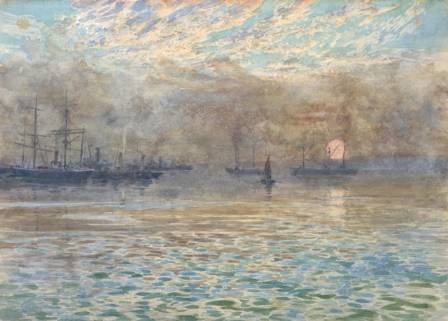
Sunset on the Seine in Winter
In this cold-weather depiction, Monet illustrates the quiet charm of the Seine River at dusk. The frozen glimmers on the river’s surface stand in opposition to the toasted tones of the heavens, establishing a graceful equilibrium. His refined touch and pigment integration produce a feeling of serenity and silence.
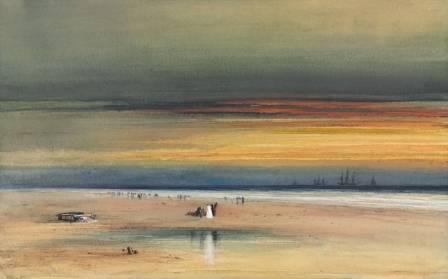
Sunset at Pourville, Open Sea, 1882
This artwork depicts the immense scale of the sea beneath a dazzling evening sky. Through the use of courageous pigments and wide, rhythmic strokes, Monet captures the vitality and vastness of the environment. The sun’s reflection on the waves further strengthens the energetic arrangement of the piece.
Sunset at Étretat, 1885
This creation features a vivid evening sky positioned behind the famous Étretat rock formations. Monet’s use of luminous pigments and his method of stacking paint layers result in a glowing appearance. The dance of light across the stone and sea introduces a feeling of dimension and brilliance.
The Cliff at Étretat, 1886
This canvas showcases the Étretat cliffs under a theatrical and multi-hued twilight sky. Monet’s choice of energetic shades and rhythmic stroke work preserves the temporary splendor of the moment. The watery glimmers and the precise depiction of the rock faces highlight the unity between the environment and the light.
Actionable Advice for Painting Impressionist Evenings
The expert handling of illumination and pigment in Monet’s twilight scenes provides significant guidance for creators wanting to illustrate the magnificence of the setting sun. By reviewing his methods, we can identify several useful pointers that fit the core tenets of Impressionism:
Preserving Color and Light: Monet’s energetic choices and lighting techniques produce active and glowing environments. Try using courageous pigments and merging them gently to recreate the sun’s radiance.
Rhythmic Stroke Work: The relaxed and rhythmic strokes used by Monet communicate vitality and motion. Utilize a variety of marks to illustrate the fluidity and mutating traits of light as evening approaches.
Environmental Impacts: Give careful thought to environmental factors, such as watery glimmers and the relationship between brightness and shadow. Stack your pigments to build dimension and a feeling of the short-lived charm of dusk.
Emphasizing Atmosphere: Monet’s canvases trigger specific feelings through his choices of pigment and arrangement. Think about the heart of the message you wish to deliver and use illumination to project it.
By utilizing these strategies and observing Monet’s perspective on arrangement, you can elevate your own creative projects and capture the radiance that identifies the Impressionist style. Monet’s magnificent portrayals of the end of the day provide essential guidance for any artist. His active use of intense shades and environmental depth makes his work an ideal benchmark for coastal and maritime scenes. Integrating these methodologies will allow you to improve your arrangements and preserve the tranquil charm of the horizon.