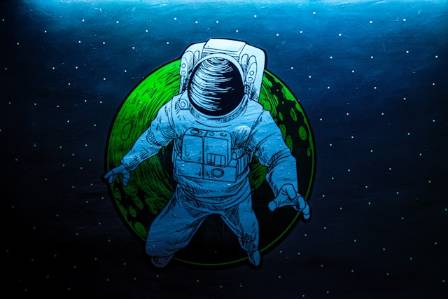
An astronaut is a professional trained to pilot, command, or serve as a crew member of a spacecraft. The term itself originates from the Greek words for "star" (astron) and "sailor" (nautes), literally meaning a "star sailor." These individuals undergo rigorous preparation to navigate the unique challenges of the cosmos.
Defining the Role of an Astronaut
Astronauts are explorers who venture beyond Earth's atmosphere to conduct scientific research and expand our understanding of the universe. To survive the vacuum of space, they wear specialized spacesuits that regulate temperature and provide oxygen. Their training is multifaceted, covering spacecraft engineering, medical procedures, and the complex physics of microgravity. This preparation ensures they can manage the mental and physical demands of living in a confined, weightless environment for extended durations.
Top Ten Educational Facts About Astronauts
-
Global Titles: Depending on the country of origin, these explorers are known by different names. In Russia, they are "Cosmonauts," while in China, they are referred to as "Taikonauts."
-
The Orbital Laboratory: Many astronauts live on the International Space Station (ISS), which orbits approximately 250 miles above our planet.
-
Physical Changes: In microgravity, the spine decompresses, causing astronauts to grow about 3% taller while in space. This change is temporary and reverses upon returning to Earth.
-
Specialized Diet: Space food is dehydrated or thermostabilized to make it lightweight, shelf-stable, and safe to eat without crumbs floating into delicate machinery.
-
Protective Gear: Spacesuits act as personal, pressurized mini-spacecraft during spacewalks, shielding the wearer from extreme heat, cold, and radiation.
-
Endurance Records: The record for the longest continuous stay in space is 437 days, held by Valery Polyakov during a mission to the Mir space station in the mid-1990s.
-
Weightlessness: Contrary to popular belief, there is gravity in space. Astronauts feel weightless because the ISS is in a constant state of freefall around the Earth.
-
Sleeping Arrangements: To prevent drifting into equipment, astronauts sleep in bags tethered to the walls of the station.
-
Mandatory Exercise: To combat the loss of bone density and muscle mass, astronauts must work out for at least two hours every day using specialized resistance machines.
-
Waterless Hygiene: Because liquid water behaves unpredictably in zero gravity, hygiene is maintained using rinseless shampoo and wet wipes rather than traditional showers.
What is NASA?
The National Aeronautics and Space Administration (NASA) is the United States government agency responsible for the civilian space program and aeronautics research. Composed of world-class scientists, engineers, and pilots, NASA designs satellites to monitor Earth's climate, builds telescopes like the James Webb to view distant galaxies, and manages the missions that send humans into the solar system.
Path to Becoming a NASA Astronaut
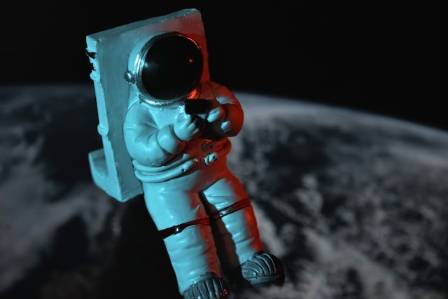
Joining the astronaut corps is highly competitive and requires a specific set of qualifications. Currently, candidates must be U.S. citizens and hold a master’s degree in a STEM field—such as engineering, biological science, physical science, computer science, or mathematics. Beyond education, NASA requires at least two years of related professional experience or at least 1,000 hours of pilot-in-command time in jet aircraft. Candidates must also pass a rigorous long-duration flight physical. Leadership, team synergy, and clear communication are essential soft skills evaluated during the selection process at the Johnson Space Center.
Milestones in Space History
The quest to reach the stars was defined by several key pioneers:
-
First Human in Space: On April 12, 1961, Soviet cosmonaut Yuri Gagarin became the first human to orbit the Earth aboard Vostok 1.
-
First American in Space: Shortly after Gagarin, Alan Shepard completed a suborbital flight on May 5, 1961, in the Freedom 7 capsule.
-
The Space Race: This era was a 20th-century competition between the Soviet Union and the United States for supremacy in spaceflight capability. While the USSR achieved early milestones like the first satellite (Sputnik) and the first spacewalk (Alexei Leonov), the U.S. focused its efforts on the lunar landing.
The Journey to the Moon
To date, the Moon is the only celestial body humans have physically visited. Between 1969 and 1972, the Apollo program successfully landed 12 men on the lunar surface.
Apollo 11: The Historic Mission
On July 20, 1969, the Eagle lunar module landed in the Sea of Tranquility. Neil Armstrong was the first person to step onto the surface, followed by Buzz Aldrin, while Michael Collins remained in orbit in the Command Module, Columbia. Armstrong’s first steps were accompanied by the iconic phrase, "That’s one small step for man, one giant leap for mankind."
Fast Facts About Neil Armstrong:
-
Early Pilot: Armstrong earned his pilot’s license at age 16, before he even had a driver's license.
-
Extended Exploration: He and Aldrin spent over two hours exploring the lunar surface, collecting 47 pounds of moon rocks.
-
Global Inspiration: The moon landing was a unifying event, watched by an estimated 650 million people worldwide.
Current Space Statistics
Determining the exact number of people who have visited space depends on the definition of the "boundary" of space.
-
The Kármán Line (International): Using the 100km (62-mile) boundary, approximately 628 people have reached space as of mid-2022.
-
U.S. Standard: Using the 50-mile boundary, the count is slightly different.
-
Global Participation: More than 40 different nations have seen their citizens travel into orbit, highlighting the increasingly international nature of space exploration.