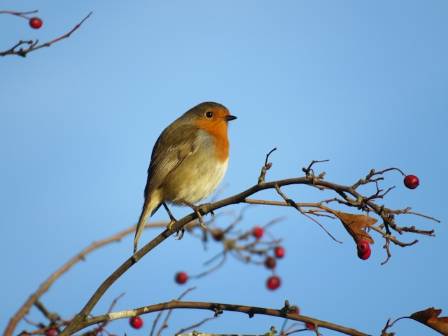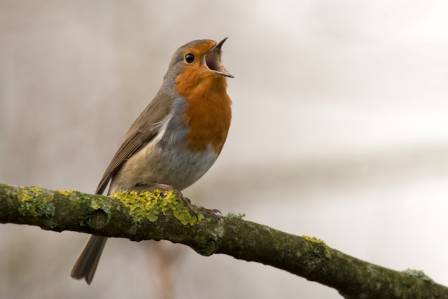
The American Robin is among the most recognizable and prevalent songbirds across the North American continent. Thriving in a variety of environments—from dense woodlands and open meadows to suburban gardens and city parks—this bird spans a territory reaching from Mexico to the farthest corners of Canada and Alaska. Its cultural significance is cemented by its status as the official state bird for Connecticut, Michigan, and Wisconsin. While many are accustomed to its melodic "cheerily" carol, this iconic species possesses many surprising biological and behavioral traits.
Taxonomic Roots and Historical Naming
Despite its common name, the American Robin is actually a member of the thrush family (Turdidae), making it a close relative of bluebirds and solitaires rather than the European Robin. The bird received its name from early colonial settlers who noticed its resemblance to the orange-breasted bird from their homeland. Scientifically, there are seven distinct subspecies, most of which share the familiar rusty-orange chest, though one unique variety in southern Baja California displays pale gray-brown underparts instead.
Dietary Habits and Seasonal Shifts
While they are famously known for pulling earthworms from lawns, the diet of an American Robin is remarkably flexible. They are essentially opportunistic omnivores whose food choices shift with the seasons. During the spring and summer, they prioritize protein-rich insects and worms to fuel the breeding season. However, in the autumn and winter, their diet transitions primarily to fruit and berries. Occasionally, robins may appear disoriented or "tipsy" in early spring; this occurs when they consume berries that have fermented during the winter thaw.
Migration Patterns and Winter Resilience
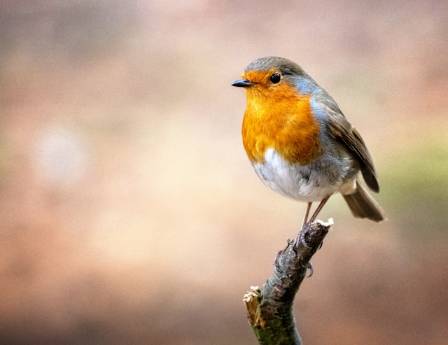
Though often hailed as the definitive herald of spring, not all robins migrate to warmer climates. Many northern populations do travel south in search of accessible food, but others remain in their general region year-round. During the winter, these resident birds change their social structure, moving away from territorial pairs to form large, nomadic flocks. These groups roam the landscape in search of winter fruit and congregate in noisy communal roosts at night to conserve heat and stay protected.
Remarkable Travel and Breeding Biology
Robins are capable of impressive physical feats during their migrations. Some individuals have been tracked traveling distances as great as 3,000 miles, moving from the American Midwest all the way to Alaska. Once they arrive at their destination, these birds do not typically maintain lifelong partnerships. Instead, they find new mates each spring through elaborate courtship rituals. Males perform "strutting" displays at daybreak, fluffing their feathers and shaking their wings while singing to attract a female.
Nesting Strategies and Survival Instincts
A single female robin can successfully raise up to three broods within a single season. They typically lay between three and five eggs of a distinctive sky-blue hue, which require approximately a fortnight to hatch. Their nests are sturdy, cup-shaped structures built from twigs and dry leaves, reinforced with mud and lined with soft grass or feathers. While Brown-headed Cowbirds often attempt to lay their own eggs in these nests to trick the robins into raising their young, robins are exceptionally skilled at identifying and removing the parasitic eggs.
Longevity and Population Resilience
In the wild, the average lifespan of an American Robin is roughly two years, though individual records show some birds reaching nearly 14 years of age. The current population is estimated at a staggering 366 million, but the species has faced significant hurdles in the past. In the mid-20th century, robins were among the first birds to suffer mass mortality from the widespread use of the pesticide DDT. Following the ban of the chemical in 1972, their numbers saw a rapid and robust recovery.
Modern Environmental Challenges
Today, the primary challenges for the American Robin are linked to urbanization. Light pollution in major cities is disrupting their natural rhythms, causing them to begin their dawn chorus significantly earlier than they would in the wild. Furthermore, research indicates that urban robins are adapting their vocalizations, singing at a higher pitch to ensure their melodies can be heard over the constant low-frequency hum of city traffic.