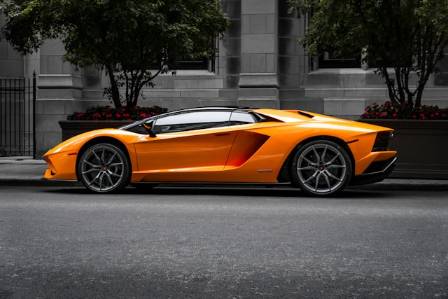
While top-tier performance specs like horsepower and acceleration often dominate the headlines, the true essence of a supercar lies in the extraordinary details beneath the carbon fiber. These vehicles are not just fast; they are triumphs of extreme engineering, born from fierce rivalries and constructed with an almost obsessive attention to detail. Understanding these lesser-known facts offers a new appreciation for the world’s most elite machines.
Thermal Management and Fluid Dynamics
The immense power generated by modern hypercars necessitates radical solutions for cooling and fueling. The Bugatti Veyron, for instance, requires a complex network of 12 radiators tucked throughout its body to prevent its 16-cylinder engine from melting down. If engineers had relied on a single traditional radiator, it would have needed to be as large as a pool table. Fuel consumption is equally extreme in high-output American muscle; the fuel injectors in a Dodge Challenger SRT Hellcat can flow a combined 4,800 cc of fuel per minute. At that rate, the engine could theoretically drain an entire Olympic-sized swimming pool in less than a year.
Surprising Foundations and Testing Phantoms

The lineage of several iconic brands and models often involves unexpected hardware. Lamborghini, now a symbol of exotic luxury, originated from a successful tractor-manufacturing business. It was only after Ferruccio Lamborghini became frustrated with the recurring clutch failures in his personal Ferrari that he decided to build a superior machine, sparking one of history's greatest automotive feuds. Similarly, when McLaren was developing the legendary F1 in the early 1990s, they didn't initially use a BMW engine to test the car's limits. Instead, they employed a massive 7.4-liter Chevrolet Big Block V8 to ensure the transmission and brakes could withstand the projected power levels.
Domestic Rivalries and Spartan Beginnings
The American sports car market has its own history of internal conflict and raw design. In the late 1980s, the fastest car in America wasn't a Corvette, but the Buick GNX. This turbocharged sleeper was so quick that it reportedly embarrassed Chevrolet’s flagship, leading to the GNX being discontinued after only 547 units. The pursuit of pure performance also led to the birth of the original Dodge Viper, a car so focused on speed that it lacked exterior door handles, windows, and even anti-lock brakes. Even the Chevrolet Corvette had a rocky start; it originally featured an underpowered six-cylinder engine and was considered a failure until a V8 was finally introduced in 1955.
Shared Architectures and Exorbitant Hardware
Beyond the unique branding, some supercars share significant DNA, while others justify their price tags through microscopic precision. The Audi R8 and the Lamborghini Gallardo are essentially mechanical cousins, utilizing nearly identical chassis and interior structures beneath their different bodywork. At the peak of bespoke manufacturing, Pagani takes luxury to a financial extreme with the Huayra. The vehicle is held together by 1,400 custom-machined titanium bolts, each branded with the Pagani logo. With a price tag of $80 per bolt, the cost of the fasteners alone exceeds $112,000, illustrating the uncompromising investment required to build a world-class hypercar.