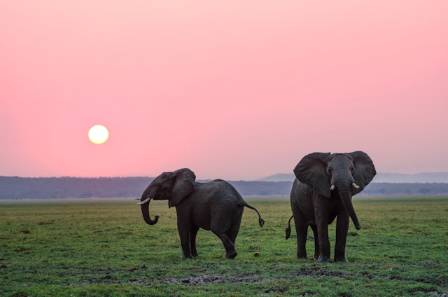
Elephants hold the title of Earth’s largest land animals, and they also have one of the most distinctive appearances. With their iconic long trunks, floppy ears, and thick legs, there’s no other creature quite like them. This article explores the different elephant species, their remarkable intelligence, and the modern-day risks that threaten their survival.
Everything you need to know about elephants
What's the difference between African and Asian elephants?
African and Asian elephants not only inhabit separate continents but also have distinct physical traits. African elephants actually consist of two species: the African savanna elephant and the African forest elephant. The African savanna elephant lives on the savannas and grasslands of sub-Saharan Africa, while the African forest elephant makes its home in the rainforests of Central and Western Africa. The African savanna elephant is the largest of all elephant species—it can grow to be 10 to 13 feet (3 to 4 meters) tall and weigh 4 to 7 tons (3,600 to 6,400 kilograms), which is roughly the weight of a fully loaded dump truck.
Asian elephants reside in the forests and grasslands across South and Southeast Asia. They reach heights of 6.5 to 11.5 feet (2 to 3.5 meters) and weigh around 5.5 tons (5,000 kilograms).
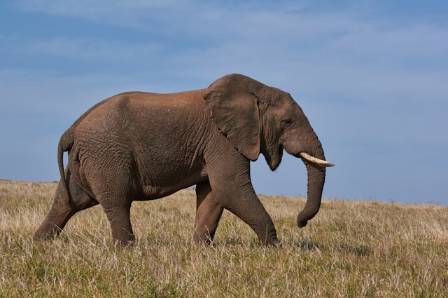
Beyond size and habitat, African and Asian elephants have other physical differences. African elephants have larger ears, while Asian elephants have smaller, rounder ones. Both male and female African elephants grow large tusks, but only a small number of male Asian elephants develop full-sized tusks. The rest of the males, along with all female Asian elephants, grow smaller tusks called “tushes.”
Why do elephants have trunks, tusks and big ears?
Elephants might look unusual, but every part of their body has evolved for a specific purpose.
An elephant’s trunk is a versatile tool that helps it breathe, eat, drink, smell, and grasp objects. African elephants have two small “fingers” at the tip of their trunk, which they use to handle items gently. Asian elephants have only one such “finger,” so they often pick up things using their entire trunk. Elephants can store about 1.5 gallons (5.5 liters) of water in their trunk, and they can suck in water 30 times faster than a human sneezes.
Elephants use their tusks for digging, rooting around for food, and defending themselves. Tusks are actually specialized, elongated teeth that keep growing throughout an elephant’s life. Just like humans are right- or left-handed, elephants tend to use one tusk more often. Researchers can determine if an elephant is “right-tusked” or “left-tusked” by checking which tusk is more worn down from use.
Elephants’ large, floppy ears also offer several benefits. Their broad surface area helps elephants release heat and stay cool, a critical adaptation in the hot climates they live in. The large ear flaps also help direct sound waves toward their inner ears, improving their hearing. Additionally, if an elephant feels threatened, it can spread its ears wide, making itself appear larger and more intimidating to potential predators.
Are elephants social?
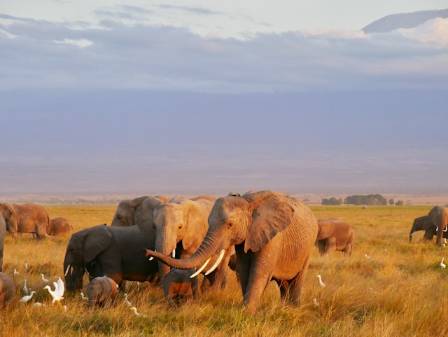
Elephants are highly social animals. They live in herds with a matriarchal structure, meaning a female leads the group. A typical herd consists of female family members and their calves, with the oldest female serving as the matriarch. Herds usually have 6 to 20 members, and Asian elephant herds are generally smaller than African elephant herds. When a herd grows too large, it splits into smaller groups to better manage resources. Male elephants typically leave their birth herd during their teenage years and spend the rest of their lives either alone or in small groups with other males.
To lead the herd effectively, the matriarch relies on her years of experience and sharp memory. She remembers where to find the best food and water sources, as well as safe spots to shelter from bad weather. She also teaches younger herd members how to interact with other elephants and navigate social dynamics. Elephants care deeply about the well-being of their herd, they will go out of their way to protect and support weak or injured members.
Elephants communicate with each other using sounds, smells, and touch. One key sound they make is a deep rumble, which is too low for humans to hear. Other elephants can detect this rumble from miles away, and they use it to greet friends, along with flapping their ears and extending their trunks. These rumbles seem to be unique to each elephant, leading scientists to believe they function like “names” for individual animals.
Are elephants intelligent?
Elephants are widely regarded as extremely intelligent creatures. They are known for their problem-solving abilities and their capacity to use tools. For example, elephants will use sticks to scratch hard-to-reach spots, swat bugs away with palm fronds, throw rocks at electric fences to disable them, and chew up bark to plug holes in drinking water sources.
Elephants also display signs of empathy and compassion. They appear to grieve for deceased friends and family members, and both African and Asian elephants engage in burying their dead.
While the saying “an elephant never forgets” is a slight exaggeration, these animals do have exceptional memories. They store important information such as the location of food and water, or safe routes for long migrations to ensure their survival. They also remember the hundreds of other elephants they encounter each year, which helps them maintain their complex social relationships.
Are elephants endangered?
Asian elephants and both species of African elephants are classified as endangered. Several threats put elephants at risk around the world. Poaching is a major danger, especially for African elephants, poachers kill elephants to harvest their valuable ivory tusks. Each year, approximately 20,000 African elephants are killed by poachers, and only around 415,000 African elephants remain in the wild.
Habitat loss also endangers both African and Asian elephants. When humans build towns, farms, roads, or fences in elephant habitats, the animals lose their homes. This human expansion also leads to conflicts: elephants may eat crops, damage property, or even harm people, which can cause local communities to retaliate by killing the elephants.
Climate change further undermines the safety of elephants’ remaining habitats. As global temperatures rise, their territories face more frequent water shortages, flooding, wildfires, and extreme heat—all of which make it harder for elephants to survive.
Conclusion
Elephants are not just Earth’s largest land animals, they are also among the most intelligent, social, and fascinating creatures on the planet. From their versatile trunks and lifelong tusks to their matriarch-led herds and empathetic behaviors, every aspect of their lives highlights their uniqueness. However, these remarkable animals face severe threats from poaching, habitat loss, and climate change. Protecting elephants is not just about saving a single species, it’s about preserving the delicate ecosystems they support and honoring the vital role they play in our planet’s biodiversity. By raising awareness, supporting conservation efforts, and working to reduce human-elephant conflict, we can help ensure that elephants continue to roam Earth’s landscapes for generations to come.