Defining the Phenomenon
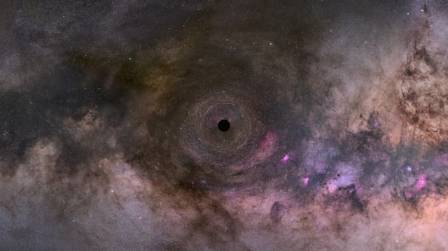
A black hole is fundamentally a region in space where the gravitational pull is so intense that nothing can escape its grasp. This extreme gravity is the result of matter being squeezed into a tiny space. While these cosmic entities may seem mysterious, understanding their characteristics helps clarify how the universe operates at its most extreme limits.
Visibility and Observation
Directly seeing a black hole is impossible because its gravitational field is strong enough to trap even light. However, astronomers can identify them by observing their impact on the surrounding environment. By studying the behavior of nearby celestial bodies, scientists can detect a black hole’s presence. For instance, stars located in close proximity may be seen being stretched or torn apart by the immense gravitational forces.
Black Holes Within Our Galaxy
The Milky Way is believed to house a major black hole at its center. While this may sound intimidating, Earth is not in any immediate peril. This specific black hole is located thousands of light-years away, ensuring that our solar system remains unaffected by its powerful pull.
The Formation of Stellar Black Holes
Stellar black holes are created during the final stages of a massive star's life. When a star runs out of nuclear fuel, the outward pressure that maintains its shape vanishes. Gravity then causes the core to collapse rapidly while the outer layers are expelled into space in a massive explosion known as a supernova. What remains is a core collapsed into a point of infinite density and zero volume.
Three Primary Classifications
Black holes are generally categorized into three types based on their scale and origin. Primordial black holes are the smallest, potentially ranging from the size of an atom to the mass of a mountain. Stellar black holes are the most frequently encountered, with masses up to 20 times that of our Sun. Finally, Supermassive black holes are the giants of the cosmos, possessing masses equivalent to more than a million Suns combined.
Time Dilation and Relativity
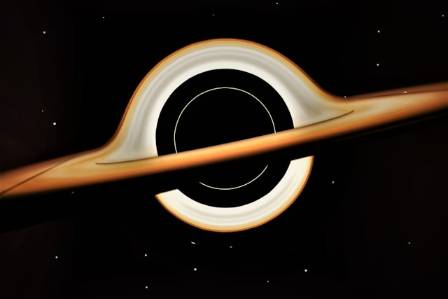
According to Einstein’s Theory of General Relativity, black holes can warp the fabric of time. To an outside observer, an object falling toward a black hole would appear to slow down significantly. This occurs because time is influenced by extreme gravitational fields and high velocities nearing the speed of light.
The History of Discovery
The existence of black holes remained theoretical until the advent of X-ray astronomy. Cygnus X-1, identified in the 1960s, was the first confirmed black hole. It possesses a mass approximately ten times greater than the Sun and provided the first concrete evidence that these objects exist.
Proximity to Earth
Determining the exact distance of the nearest black hole is a challenging task for astronomers. For example, the object V4647 Sagitarii was once thought to be a mere 1,600 light-years away. More recent data suggests it is actually much further, located roughly 20,000 light-years from our planet.
The Mystery of Wormholes
In the realm of theoretical physics, the possibility of wormholes—tunnels through space-time—is often discussed alongside black holes. While our current understanding of physics does not confirm their existence, it also doesn't rule them out. They remain one of the many possibilities scientists continue to explore.
Safety and Interaction
Contrary to popular belief, black holes are only hazardous if an object crosses their "point of no return." From a safe distance, they behave like any other massive gravitational source. It is highly unlikely for a black hole to "swallow" the entire universe, as their influence is limited to their immediate vicinity.
Influence on Popular Culture
The intriguing nature of black holes has made them a staple of the science fiction genre. They have been featured prominently in numerous films and television series, including "Interstellar," "Star Trek," and "Transformers." These portrayals often use the unique physics of black holes to drive imaginative and dramatic narratives.