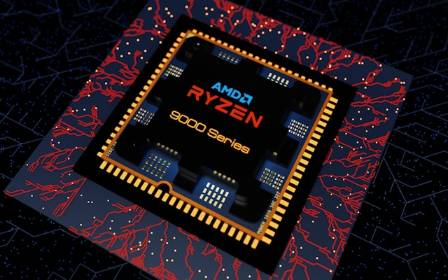
The microchip, a component often smaller than a human fingernail, serves as the bedrock of the digital age. It provides the processing power for everything from basic household gadgets to the world’s most sophisticated supercomputers. The transition of the microchip from a theoretical concept to a universal technological requirement is a narrative defined by innovation, strategic competition, and global transformation. Spanning over five decades, this history reveals how a series of scientific breakthroughs reshaped society.
The Foundation of Early Electronics
Before the invention of integrated circuits (ICs), electronic devices relied on "discrete components." Each part was a standalone unit that performed a specific task within a larger system.
-
Resistors: These were used to manage the flow of electrical current, dividing voltages and adjusting signal levels.
- Capacitors: Acting as temporary energy storage units, capacitors were vital for stabilizing signals and managing timing within a circuit.
- Inductors: Similar to capacitors but storing energy in a magnetic field, inductors smoothed out voltages and were essential for radio filters and oscillators.
- Transformers: These allowed for the safe transfer of energy between circuit stages by adjusting voltage levels, a necessity for power supplies.
The Era of Vacuum Tubes
Among early components, the "valve" or vacuum tube was the most critical. These glass-encased devices were the primary means of controlling and amplifying electronic signals.
-
Broadcasting: Valves were the core of early radio and television sets, making the transmission and reception of long-distance signals possible.
-
Audio: They provided the amplification necessary for public address systems and high-fidelity home audio.
-
Pioneering Computers: Most significantly, valves were the switching elements for the world’s first computers. However, they were heavy, fragile, and generated immense heat, often leading to frequent system failures.
Chronological Milestones of Microchip Development
-
1947 – The Transistor: Invented at Bell Labs, this device offered a smaller, more reliable alternative to the vacuum tube.
-
1958 – The First Integrated Circuit: Jack Kilby of Texas Instruments demonstrated that multiple components could be hosted on a single piece of semiconductor material.
-
1959 – The Monolithic IC: Robert Noyce of Fairchild Semiconductor developed a version of the circuit that could be mass-produced on a single silicon "die."
-
1961–1965 – NASA’s Influence: The U.S. space program became the primary early customer for microchips, funding the refinement of the technology for the Apollo missions.
-
1971 – The Intel 4004: The world’s first commercially available microprocessor was released, placing an entire central processing unit (CPU) on one chip.
-
1984 – Wearable Tech: The Adidas Micropacer became the first shoe to utilize a microchip, signaling the move of the technology into lifestyle products.
Challenges of the Pre-Microchip Age
The limitations of discrete components and vacuum tubes created significant barriers to progress. Early computers were gargantuan, often filling entire floors of office buildings while consuming hundreds of kilowatts of electricity. Because valves frequently burned out, maintenance was a constant and expensive struggle.
Miniaturization was nearly impossible. While printed circuit boards (PCBs) helped organize these parts, the components themselves were physically restricted. For instance, a vacuum tube requires a specific physical volume to maintain its vacuum, and a resistor’s power rating is directly tied to its physical size. Shrinking these parts without losing their electrical properties was a riddle that traditional manufacturing could not solve.
The Semiconductor Revolution
The discovery of the transistor changed everything. Research at Bell Labs led to the point-contact transistor in 1947 and the bipolar junction transistor in 1948. Unlike vacuum tubes, transistors were solid-state, meaning they had no moving parts or glass envelopes. They were smaller, cheaper to manufacture, and consumed a fraction of the power. This shift allowed for the creation of portable electronics and set the stage for the integrated circuit.
From Concept to Practical Microchips
The concept of the microchip was born from the desire to place an entire circuit on a single crystal. In 1958, Jack Kilby succeeded in creating a hybrid circuit, but it was hand-wired and difficult to produce at scale.
Robert Noyce’s 1959 innovation—the monolithic integrated circuit—was the true turning point. By using the "planar process," his team could "print" all components and their connections onto a single silicon wafer simultaneously. This made the microchip commercially viable and ready for mass production.
The Rise of the Microprocessor
By the late 1960s, computers were smaller but still required dozens of different chips to function. This changed when Intel was commissioned by the Japanese company Busicom to design chips for a new calculator. Rather than building several specialized chips, Intel engineers Federico Faggin and Marcian Hoff designed a single, programmable "universal" chip: the Intel 4004.
This 4-bit CPU could be programmed to perform various tasks, effectively birthing the microprocessor. This led directly to the 8080 and 8086 processors, which established the x86 architecture still found in most personal computers today.
Modern Influence and Strategic Importance
In the present day, microchip technology is the invisible hand guiding global society. Modern chips contain billions of transistors—an achievement of engineering that follows "Moore’s Law," the observation that the number of transistors on a chip doubles roughly every two years.
Beyond convenience, microchips are now a matter of national security and global geopolitics. Because they are essential for everything from banking to missile guidance systems, the ability to manufacture advanced semiconductors has become a primary driver of international trade relations and economic power. The journey of the microchip is a testament to how human persistence can shrink a room-sized machine into a sliver of silicon that fits in a pocket.